
African Wild Dogs: Africa's Most Fascinating Safari Animal
Meet Africa's Most Fascinating Safari Animal: The African Wild Dog
When people dream about an African safari, they usually imagine lions lounging beneath acacia trees, elephants crossing vast plains, or perhaps a leopard draped across a tree branch.
But ask experienced safari guides about the animal that excites them most, and many will tell you it's none of those.
It's the African wild dog.
Also known as the painted wolf, the African wild dog is one of Africa's most remarkable—and endangered—predators. A sighting is often considered one of the greatest wildlife experiences a traveler can have on safari.
What Makes African Wild Dogs So Special?
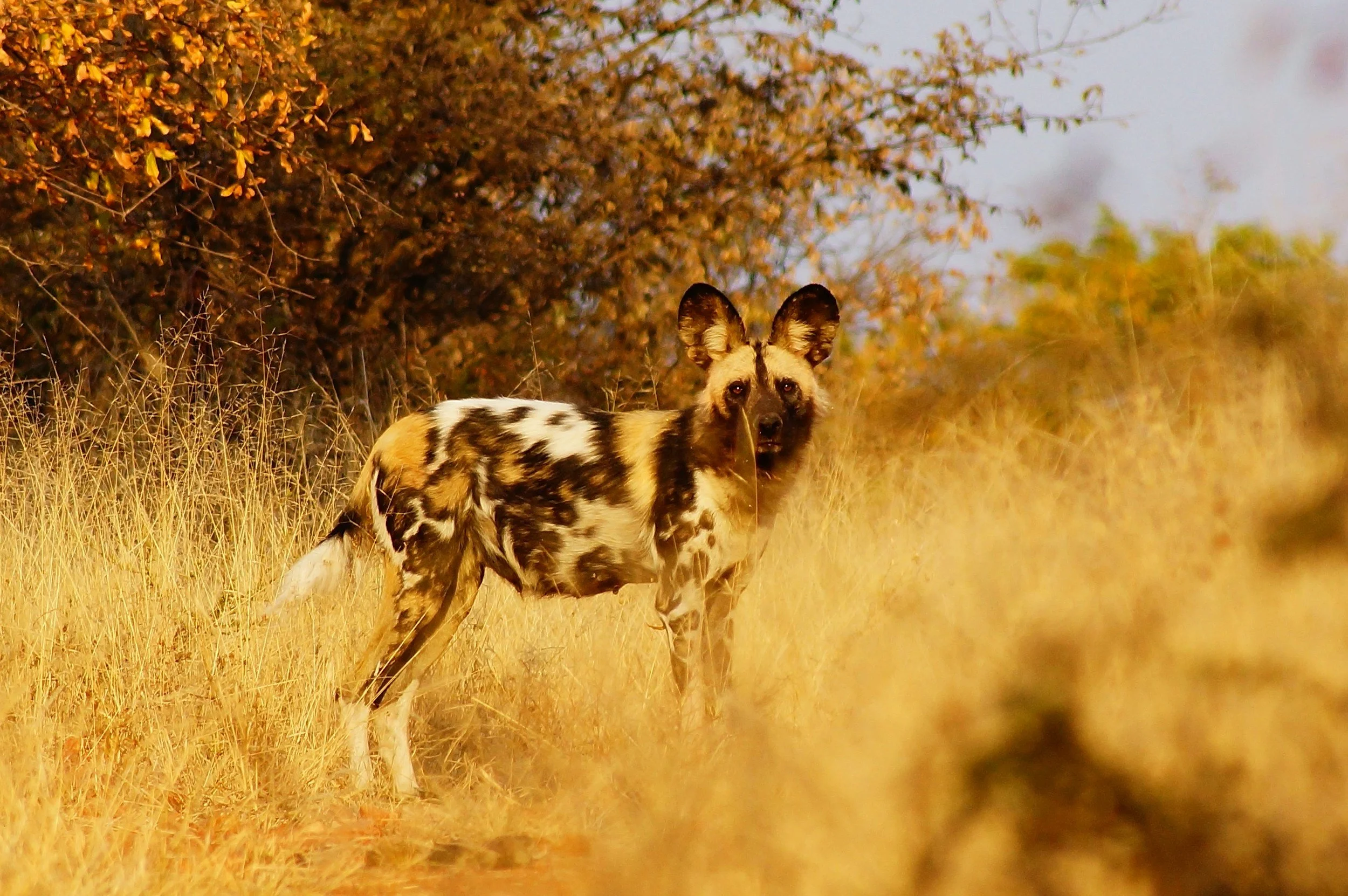
At first glance, wild dogs look almost whimsical. Their coats are covered in unique patches of black, brown, white, and gold, giving each animal its own distinctive appearance. No two wild dogs have the same markings.
Their oversized ears make them instantly recognizable, but those ears serve an important purpose. They help keep the dogs cool in Africa's heat and allow them to communicate and hear one another over long distances.
Unlike lions, leopards, and cheetahs, African wild dogs belong to their own unique branch of the canine family. Their scientific name, Lycaon pictus, translates roughly to "painted wolf," a fitting description for one of Africa's most colorful animals.
Masters of Teamwork
What truly sets African wild dogs apart is the way they work together.
Wild dogs live in tightly bonded family packs that can range from just a few animals to more than twenty. Every member of the pack has a role, and cooperation is at the heart of everything they do.
When hunting, they communicate constantly, coordinating their movements with remarkable precision. Rather than relying on strength or speed alone, they depend on teamwork and endurance.
The result? African wild dogs are among the most successful hunters in Africa.
While lions may succeed in only a fraction of their hunting attempts, wild dogs often achieve success rates exceeding 70 percent. Their ability to work together allows them to pursue prey over long distances until an opportunity presents itself.
Watching a pack hunt is often described as witnessing one of nature's greatest examples of cooperation.
Family Bonds That Are Surprisingly Moving
Perhaps the most fascinating aspect of wild dog behavior is how much they care for one another.
After a hunt, adult dogs return to feed puppies, elderly members of the pack, and injured animals that were unable to participate. Food is shared throughout the group.
Puppies are not simply tolerated—they are prioritized. In many cases, young dogs eat before adults.
This level of cooperation and care is unusual among predators and gives travelers a glimpse into the complex social lives of these animals.
Many safari guests are surprised to find themselves emotionally invested in a pack's story after spending time observing them.
One of Africa's Rarest Safari Sightings
Unfortunately, African wild dogs are also among Africa's most endangered large carnivores.
Habitat loss, disease, human-wildlife conflict, and competition with larger predators have all contributed to declining populations. Today, fewer than 7,000 remain in the wild.
Because their numbers are relatively low and they roam across vast territories, sightings are never guaranteed.
That rarity is part of what makes an encounter so memorable.
For many travelers, spotting a pack of wild dogs becomes the highlight of an entire safari—not because they expected it, but because the experience feels so unique and authentic.
Where Can You See African Wild Dogs?
Some of the best destinations for wild dog sightings include:
Botswana's Okavango Delta
Zimbabwe's Hwange National Park
Zambia's South Luangwa National Park
Kenya's Ol Pejeta Conservancy
Parts of Namibia and Mozambique
These destinations offer some of the strongest conservation programs and healthiest wild dog populations in Africa.
Why Travelers Remember Them
Most visitors arrive in Africa hoping to check the Big Five off their list.
But many leave talking about a different animal entirely.
African wild dogs remind us that the most memorable travel experiences are often the ones we didn't expect. Their intelligence, teamwork, family bonds, and rarity make them one of the most captivating animals on the continent.
If you're planning an African safari, keep your eyes open for those distinctive painted coats and oversized ears.
You may discover that Africa's most unforgettable wildlife experience comes from an animal you've never heard much about before.
Your Globetrotting Friend,
Joy