The Next Big Travel Trend Is Looking Up
For most of human history, the night sky was our map, our calendar, our clock and our greatest source of wonder.
Then we invented streetlights, glowing billboards, parking lots—and cities that never truly become dark. Somewhere along the way, many of us stopped looking up.
Astro-tourism is changing that.
This rapidly growing style of travel is centered around the wonders of the night sky: chasing the Northern Lights, watching a meteor shower, observing an eclipse or simply standing beneath a Milky Way so brilliant that it hardly seems real.
And no, you do not need to understand constellations, own a telescope or know the difference between a comet and an asteroid. You simply need to be curious—and willing to stay awake past your bedtime.
When Darkness Becomes the Destination
There is darkness, and then there is true darkness.
Far from cities, highways and artificial lights, the sky does not merely look clearer. It looks bigger. Stars appear by the thousands. Familiar constellations become surrounded by countless smaller points of light, and the Milky Way can stretch from horizon to horizon like a shimmering brushstroke across the heavens.
According to DarkSky International, most people in Europe and North America now live in places where light pollution prevents them from seeing the Milky Way. That means one of nature’s most magnificent sights has become unfamiliar to much of the modern world.
Perhaps that is why standing beneath a truly dark sky can feel so emotional. It reminds us how enormous the universe is—and, oddly enough, how comforting it can be to realize we are only a tiny part of it.
The Northern Lights: Nature’s Greatest Light Show
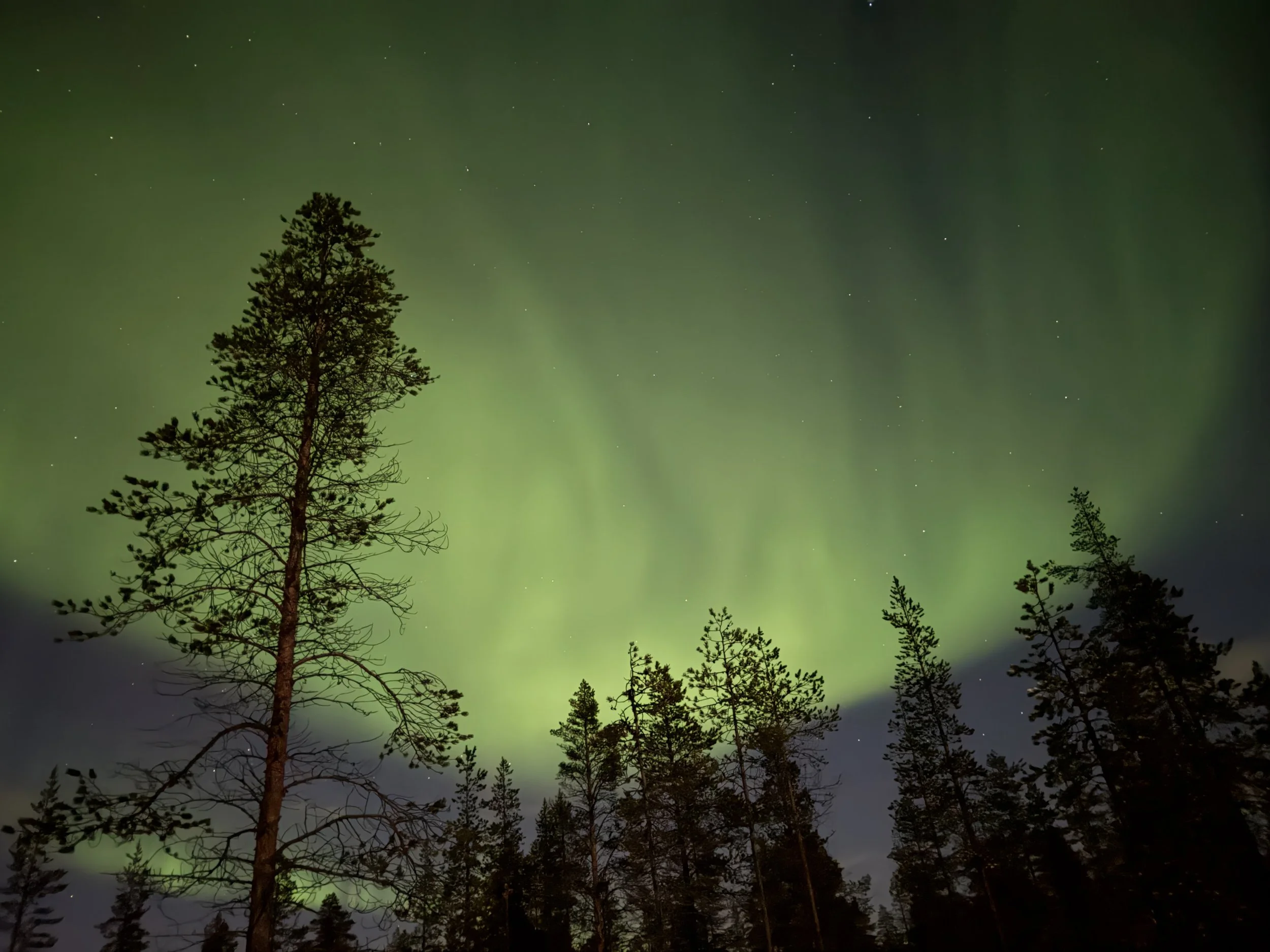
The Northern Lights may be the best-known form of astro-tourism, and for good reason.
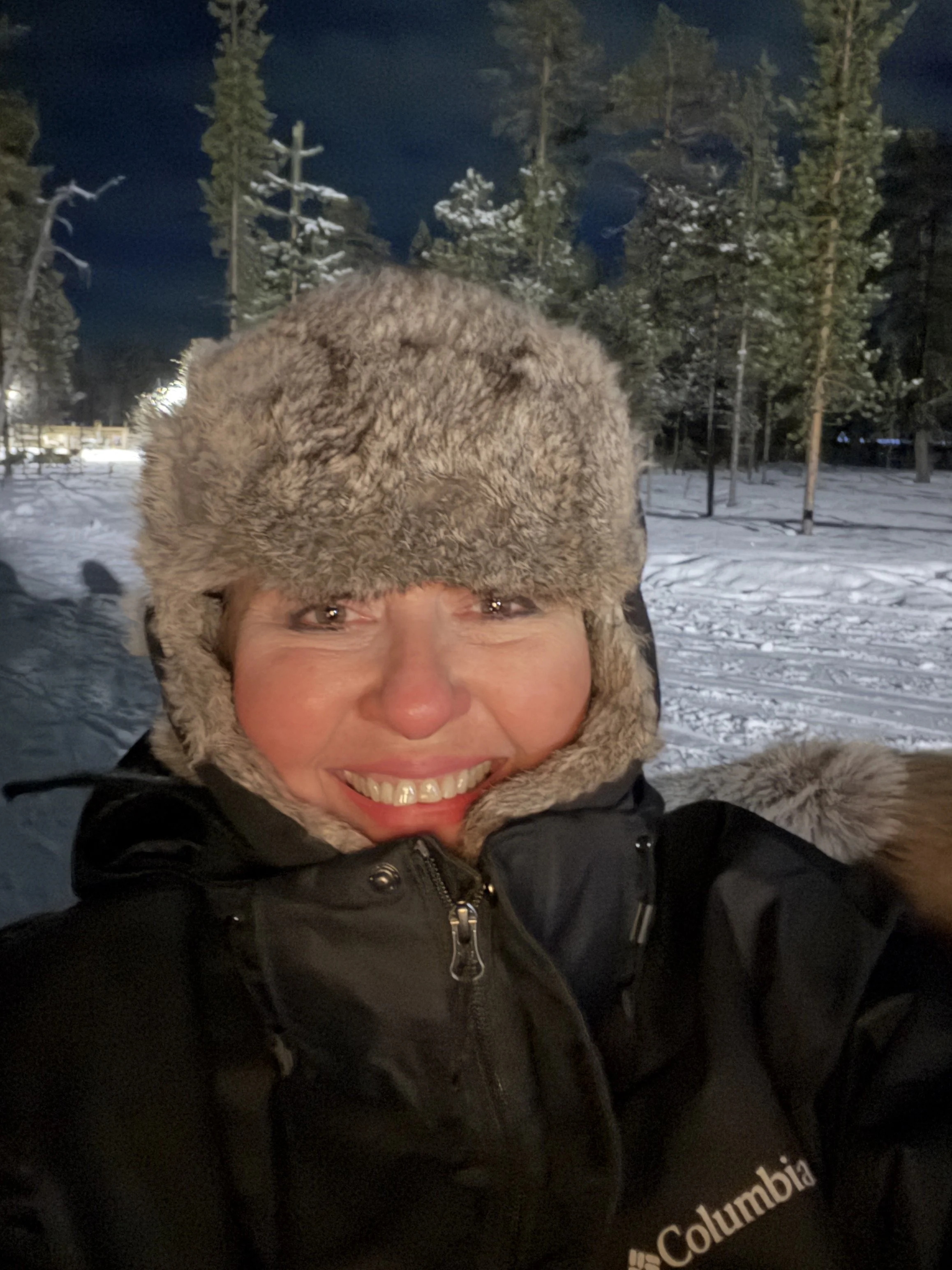
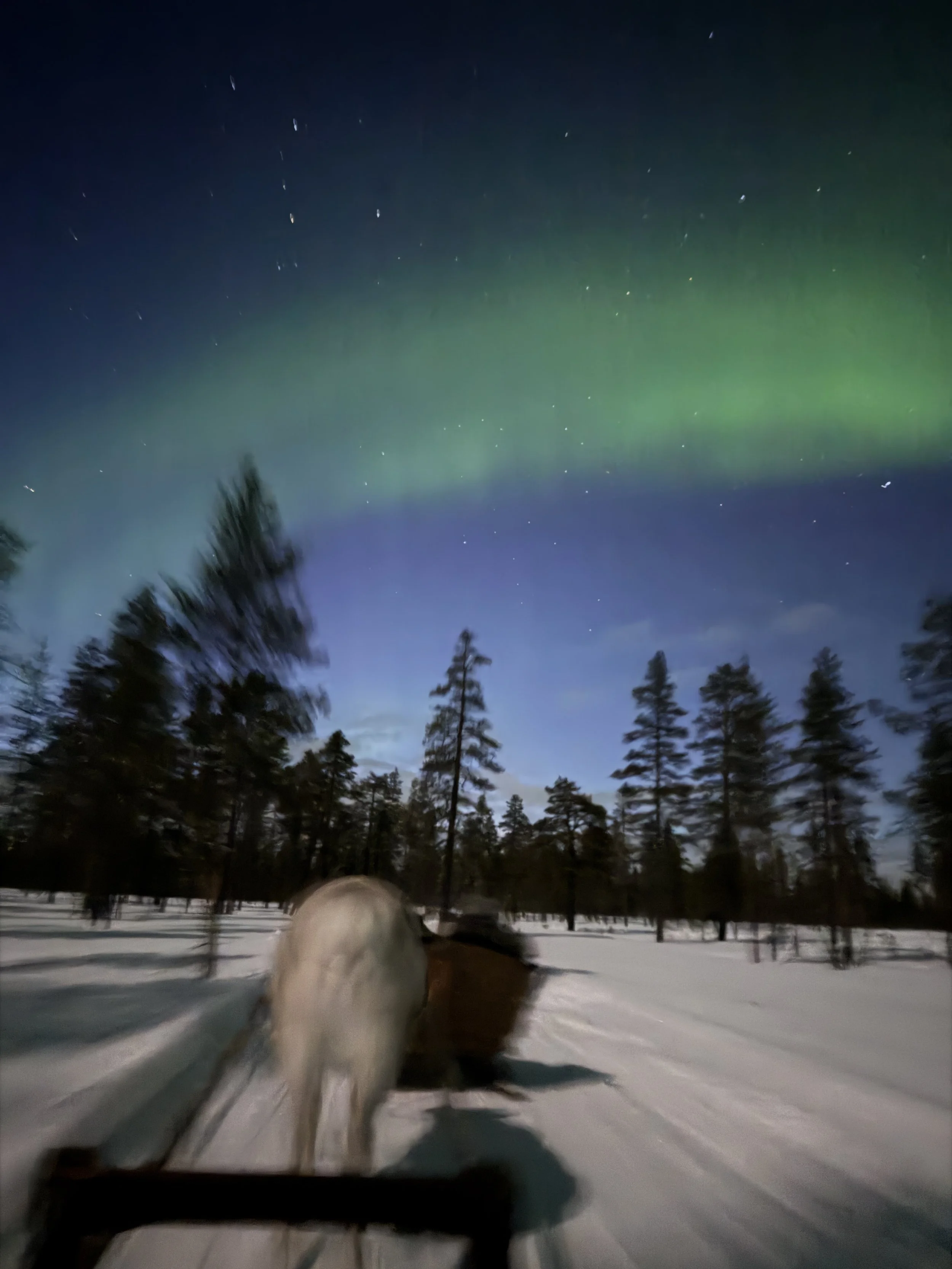
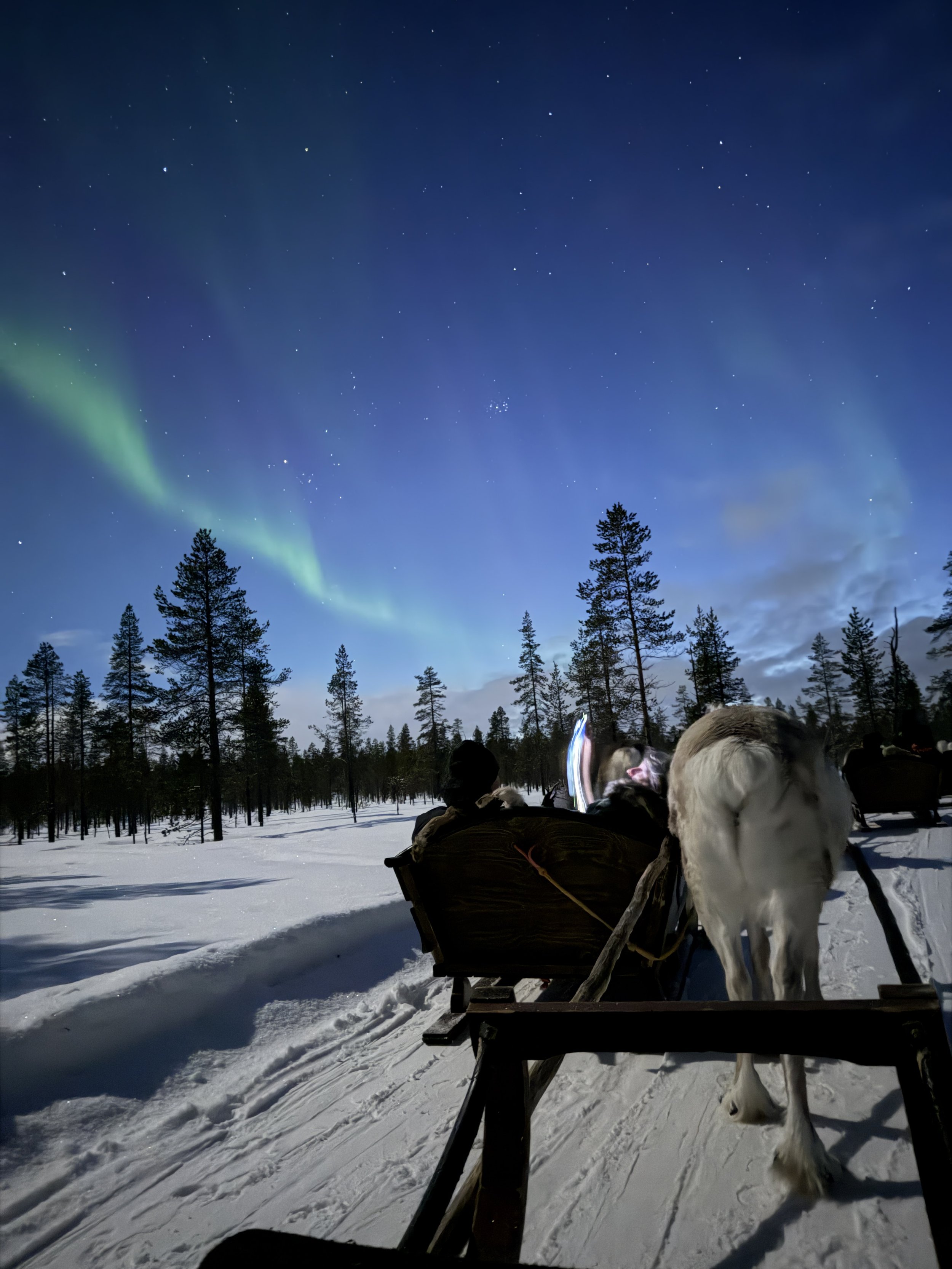
Imagine standing outside on a frozen night in Iceland, Norway, or Alaska, or being pulled by a reindeer in a sleigh in Finland (been there, done that 🙂). The world around you is quiet and dark. Then a faint glow appears along the horizon. It begins to move, stretching into ribbons of green that ripple across the sky. Sometimes pink, violet and red join the performance.
There is no curtain time and no guarantee. The aurora operates on its own schedule, created when energized particles from the sun interact with Earth’s upper atmosphere.
NOAA Space Weather Prediction Center
That unpredictability is part of its magic. Everyone waits together, watching the sky and hoping nature decides to put on a show.
And when it does? People gasp. They laugh. Some cry. Everyone forgets about being cold.
More Than the Aurora
Astro-tourism is much bigger than Northern Lights chasing.
Travelers are venturing into deserts, mountains and remote national parks to see skies untouched by city glow. They are planning trips around meteor showers and eclipses, visiting observatories, joining astronomer-led stargazing walks and listening to the ancient stories different cultures have used to explain the heavens.
In places such as the deserts of Chile, the wide-open landscapes of the Serengeti and designated Dark Sky areas around the world, nighttime is no longer what happens after the day’s activities end.
Nighttime is the experience.
Even an African safari changes after sunset. Beneath a vast, uninterrupted sky, the Southern Hemisphere reveals unfamiliar constellations while the sounds of the bush continue in the darkness. It is a powerful reminder that wonder does not clock out when the sun goes down.
Maybe We All Need to Look Up
Astro-tourism is not really about checking another sight off a list. It is about recovering something many of us did not realize we had lost.
Stillness. Darkness. Perspective. Wonder.
We spend so much of our lives looking down—at phones, calendars, work and the next item demanding our attention. Perhaps the growing popularity of astro-tourism is telling us something.
Maybe we are ready to step away from the noise, travel somewhere beautifully dark and remember what the universe looks like when nothing gets in the way.
Sometimes the most unforgettable journey begins by simply looking up.
Your Globetrotting Friend,
Joy